

Kasomi
JT Founder
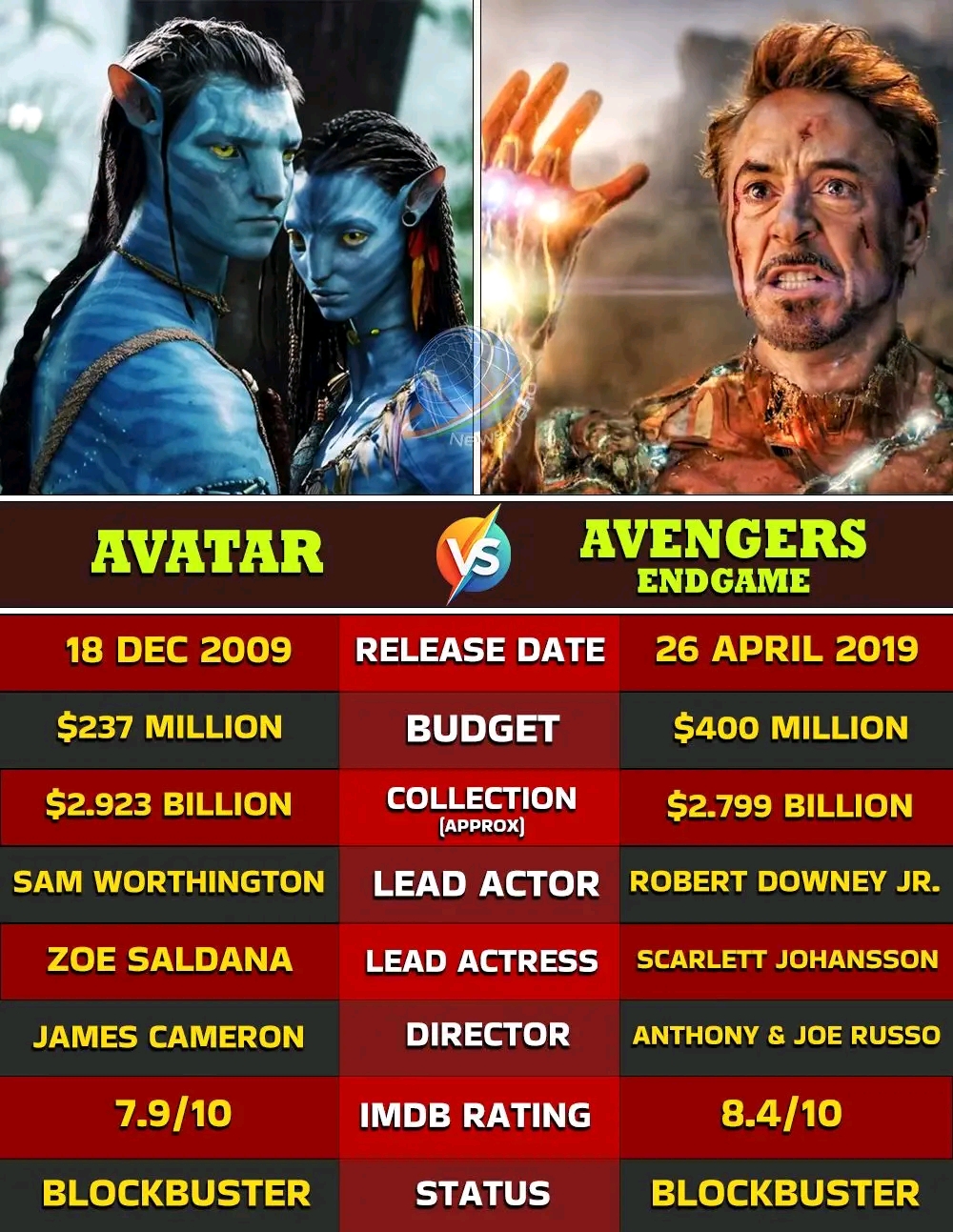
"Avatar" (2009) and "Avengers: Endgame" (2019) are two cinematic landmarks that not only broke box office records but also defined their respective franchises in modern filmmaking. Directed by James Cameron, "Avatar" is famous for its groundbreaking visual effects and immersive world-building on the alien planet of Pandora. The film follows Jake Sully, a paraplegic former Marine, who joins the Avatar Program, allowing him to inhabit a genetically engineered Na'vi body. With its innovative use of 3D technology and motion capture, "Avatar" captivated audiences worldwide, grossing around $2.923 billion, making it the highest-grossing film of all time at the time of its release. Its themes of environmentalism and colonialism resonated deeply with viewers, making it a cultural phenomenon.
On the other hand, "Avengers: Endgame," directed by Anthony and Joe Russo, marks the conclusion of over a decade of interconnected storytelling within the Marvel Cinematic Universe (MCU). Featuring iconic characters like Iron Man, Captain America, and Thor, the film follows the remaining Avengers as they attempt to undo the catastrophic events caused by Thanos in "Infinity War." Released in April 2019, "Endgame" became a global sensation, grossing around $2.798 billion and briefly overtaking "Avatar" as the highest-grossing film before "Avatar" reclaimed its title after a re-release. The film was praised for its emotional depth, character arcs, and thrilling action sequences, offering a satisfying conclusion to many beloved characters’ journeys.
Both films achieved monumental success and captivated audiences worldwide, yet they represent different aspects of cinematic storytelling. "Avatar" is an epic science fiction tale that focuses on visual innovation and deep themes about nature and humanity's relationship with it. In contrast, "Avengers: Endgame" is the culmination of a shared universe narrative, emphasizing heroism, sacrifice, and teamwork in the face of overwhelming odds. Their contrasting storytelling approaches—one shaped by a singular visionary and the other by collaborative franchise filmmaking—demonstrate how diverse narratives can achieve monumental success in contemporary cinema. As both films continue to influence filmmakers and entertain audiences, they stand as milestones in the evolving landscape of blockbuster filmmaking.
On the other hand, "Avengers: Endgame," directed by Anthony and Joe Russo, marks the conclusion of over a decade of interconnected storytelling within the Marvel Cinematic Universe (MCU). Featuring iconic characters like Iron Man, Captain America, and Thor, the film follows the remaining Avengers as they attempt to undo the catastrophic events caused by Thanos in "Infinity War." Released in April 2019, "Endgame" became a global sensation, grossing around $2.798 billion and briefly overtaking "Avatar" as the highest-grossing film before "Avatar" reclaimed its title after a re-release. The film was praised for its emotional depth, character arcs, and thrilling action sequences, offering a satisfying conclusion to many beloved characters’ journeys.
Both films achieved monumental success and captivated audiences worldwide, yet they represent different aspects of cinematic storytelling. "Avatar" is an epic science fiction tale that focuses on visual innovation and deep themes about nature and humanity's relationship with it. In contrast, "Avengers: Endgame" is the culmination of a shared universe narrative, emphasizing heroism, sacrifice, and teamwork in the face of overwhelming odds. Their contrasting storytelling approaches—one shaped by a singular visionary and the other by collaborative franchise filmmaking—demonstrate how diverse narratives can achieve monumental success in contemporary cinema. As both films continue to influence filmmakers and entertain audiences, they stand as milestones in the evolving landscape of blockbuster filmmaking.